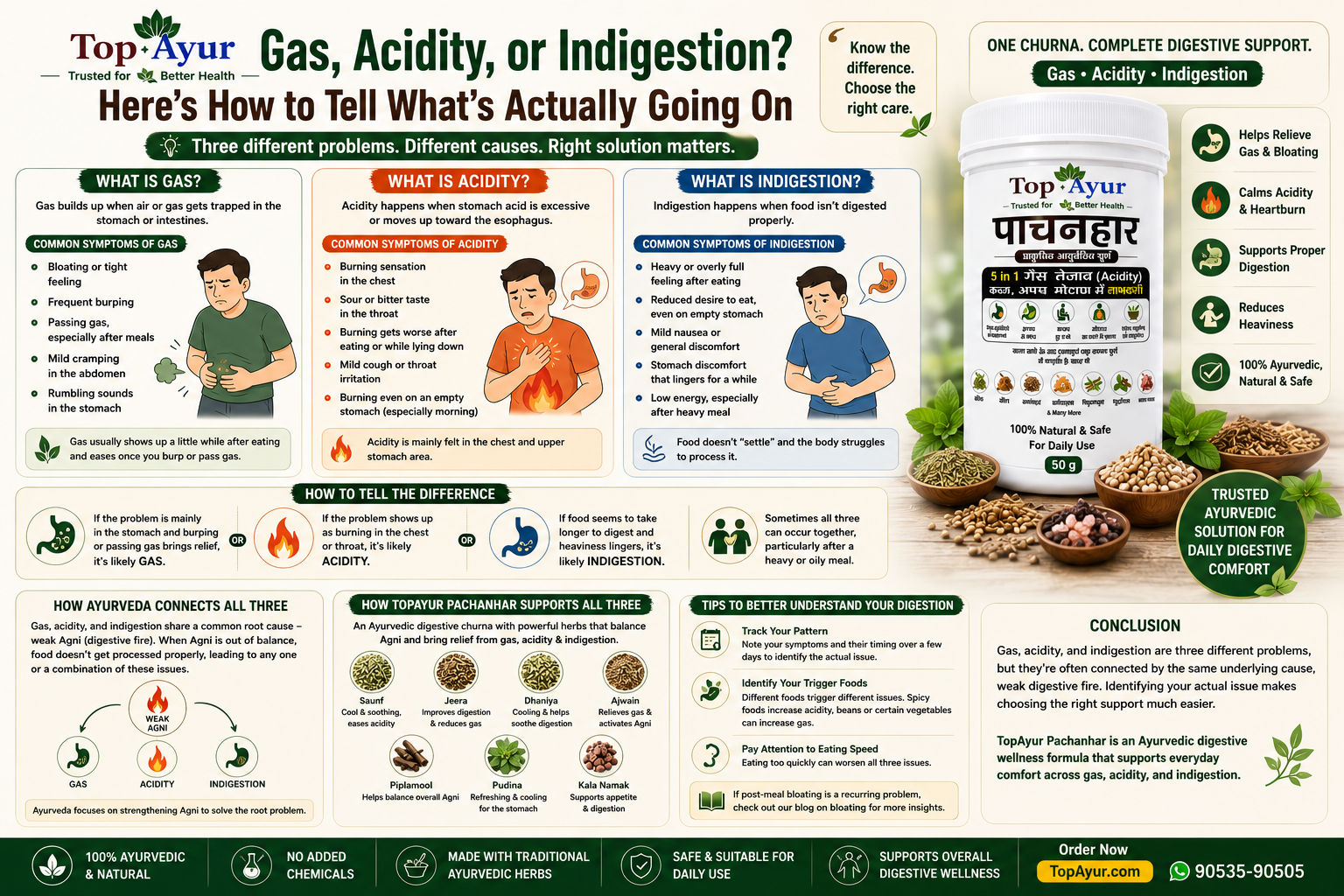
The moment something feels off in the stomach, most people default to one of two explanations: "I think it's gas" or "must be acidity." But gas, acidity, and indigestion are actually three distinct issues, each with different causes, symptoms, and the kind of care they respond to.
Once you can correctly identify what you're actually dealing with, choosing the right support becomes a lot easier. This blog breaks down all three so you know exactly what's happening.
What Is Gas and What Does It Feel Like?
Gas builds up when air or gas gets trapped in the stomach or intestines, either as a natural byproduct of digestion or from air swallowed while eating.
Common Symptoms of Gas
- A bloated or tight feeling in the stomach
- Frequent burping
- Passing gas, especially after meals
- Mild cramping in the abdomen
- Audible sounds or rumbling in the stomach
Gas usually shows up a little while after eating and tends to ease once you burp or pass gas.
What Is Acidity and What Does It Feel Like?
Acidity happens when the stomach produces excess acid, or when that acid moves up toward the esophagus. This is also known as heartburn or acid reflux.
Common Symptoms of Acidity
- A burning sensation in the chest or center of the chest
- A sour or bitter taste rising in the throat
- Burning that gets worse after eating or while lying down
- A mild cough or throat irritation
- A burning feeling even on an empty stomach, especially in the morning
Acidity is mainly felt in the chest and upper stomach area, while gas tends to be felt more broadly across the abdomen.
What Is Indigestion and What Does It Feel Like?
Indigestion happens when food isn't digested properly. It can sometimes be the underlying cause of both gas and acidity, or it can occur on its own.
Common Symptoms of Indigestion
- A heavy or overly full feeling after eating
- Reduced desire to eat, even on an empty stomach
- Mild nausea or general discomfort
- Stomach discomfort that lingers for a while
- Low energy, especially after a heavy meal
The main sign of indigestion is that food doesn't seem to "settle", and the body struggles to process it.
How to Tell the Difference
Here's a simple way to quickly identify which one you're dealing with:
- If the problem is mainly in the stomach and burping or passing gas brings relief, it's likely gas
- If the problem shows up as burning in the chest or throat, it's likely acidity
- If food seems to take longer to digest and heaviness lingers, it's likely indigestion
Sometimes all three can occur together, particularly after a heavy or oily meal.
How Ayurveda Connects All Three
In Ayurveda, gas, acidity, and indigestion are all considered to share a common root cause, weak Agni, or digestive fire. When Agni is out of balance, food doesn't get processed properly, which can lead to any one, or a combination, of these three issues.
This is why the Ayurvedic approach focuses on strengthening overall digestive fire rather than just managing individual symptoms as they show up.
How TopAyur Pachanhar Supports All Three
TopAyur Pachanhar is an Ayurvedic digestive churna specifically formulated to support relief from gas, acidity, and indigestion together. Its ingredients, including saunf, jeera, dhaniya, ajwain, piplamool, pudina, and kala namak, work together to help balance digestion.
Saunf and pudina offer cooling properties that can support acidity, while ajwain and jeera help activate digestion to support both gas and indigestion. Piplamool plays a role in helping balance overall Agni.
Tips to Better Understand Your Own Digestion
Track Your Pattern
Note your symptoms and their timing over a few days. This makes it much easier to identify whether the issue is mainly gas, acidity, or indigestion.
Identify Your Trigger Foods
Different foods tend to trigger different issues. Spicy food often increases acidity, while beans or certain vegetables can increase gas.
Pay Attention to Eating Speed
Eating too quickly can worsen all three issues, since the body doesn't get enough time for proper digestion.
If post-meal bloating tends to be a recurring problem for you, our blog on bloating covers that in more detail.
Conclusion
Gas, acidity, and indigestion are three different problems, but they're often connected by the same underlying cause, weak digestive fire. Correctly identifying your actual issue makes it much easier to choose the right kind of support.
TopAyur Pachanhar is an Ayurvedic digestive wellness formula made from traditional ingredients, designed to support everyday comfort across gas, acidity, and indigestion. With the right understanding and consistent use, keeping digestion naturally balanced becomes a lot more achievable.